
Now, every team managing digital edge hits the same fork: explore your own tooling to patch and manage them or acquire a vendor platform.
The reflex is to ask which one is “safer.” That’s the wrong frame. The risk doesn’t shrink – it moves.
𝐁𝐮𝐲 𝐚 𝐯𝐞𝐧𝐝𝐨𝐫 𝐭𝐨𝐨𝐥 and you lower execution risk. You inherit mature engineering, regular patching, threat research, audit evidence, and integrations with your existing stack. In exchange, you take on third-party and supply-chain risk – their code, cloud, and update process become part of your attack surface. CISA treats that exposure as a first-order concern, not a footnote.
𝐁𝐮𝐢𝐥𝐝 𝐢𝐧-𝐡𝐨𝐮𝐬𝐞 and you lower third-party exposure. You keep control of logic, telemetry, data – worth a lot when the use case is for your environment and can’t leave your walls. In exchange, you own build, maintenance, and operational risk. The quiet failure mode is false confidence: tools that launch strong, then drift – no patching, no RBAC, no audit logs, no owner, stales over time. A homegrown tool is still software, and software needs a secure SDLC. And carries a higher risk.
So, the honest answer is usually hybrid: buy the platform, build the intelligence around it. Vendor base for patching and management; your own correlation rules, risk scoring, and workflow on top. Vendor maturity, without surrendering your context.
The real CISO question isn’t “vendor or in-house.” It’s “which risk am I better equipped to manage?”
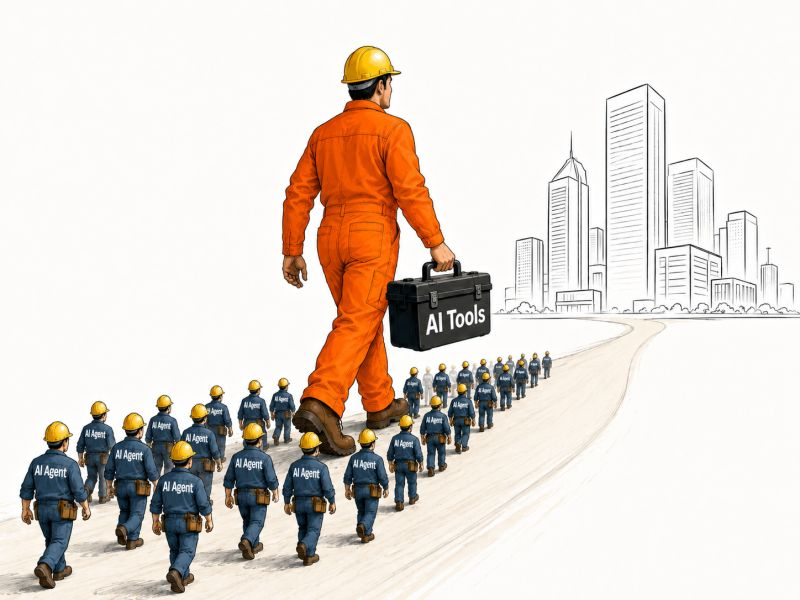
One more wrinkle for 2026: more teams are using AI agents to build that in-house tooling. It works – and it quietly amplifies every risk above. Treat AI output as untrusted draft code, not a shortcut around your controls:
→ Review every line. 2025 studies found security flaws in ~ 40–45% of AI-generated code. Plausible isn’t secure.
→ Verify every dependency. Nearly 20% of LLM-suggested packages don’t exist—and attackers now register those phantom names to serve malware (“slop-squatting”). Pin, scan, confirm before you install.
→ Keep secrets out of prompts. Credentials, device IDs, and architecture details can leak to model providers. Know the retention terms.
→ Run it through your real pipeline. SAST, dependency and secrets scanning, code review – AI code gets the same gate as human code. NIST’s SSDF carves out no exception.
→ Demand explainability and an owner. If AI writes your patch-validation or device-auth logic and no one can explain it, you’ve built an unowned tool from the cautionary tale.
You can hand the toolbox to a fleet of AI agents. But someone still has to lead the crew and own the risk.