



Managing assets, whether physical devices, digital objects, or IoT endpoints—has always been central to operational success. As connectivity and technology continue to advance, asset management too has rapidly evolved, moving from labour intensive manual tracking to seamless, intelligent, and data-driven systems.
The Reality of Asset Management Today: Gaps That Hurt
While many organizations use a mix of vendor tools and industry-standard solutions, these setups often only address parts of the asset lifecycle. The result? Fragmented data, inconsistent visibility, and limited coordination across teams. Siloed information, lack of real-time insights, and minimal automation continue to make asset management inefficient even in today’s hyper-connected world.
Every organization depends on a wide range of assets—equipment, infrastructure, software, and now, a fast-growing universe of operational devices. When asset management isn’t unified or robust, the risks escalate: increased downtime, operational inefficiencies, compliance issues, and potential security vulnerabilities.
A Smarter, Connected Way to Manage Assets
A modern asset management solution should offer a structured, unified, and continuously updated view of all device assets across the edge network. It should help teams maintain accurate asset records, track lifecycle status, strengthen security, and extract meaningful insights to improve operations, ensuring every edge asset stays protected and accounted for through trusted authentication and encrypted communication. SmartHub.ai brings all these capabilities together through its SmartHub INFER™, an AI-driven approach to asset management.
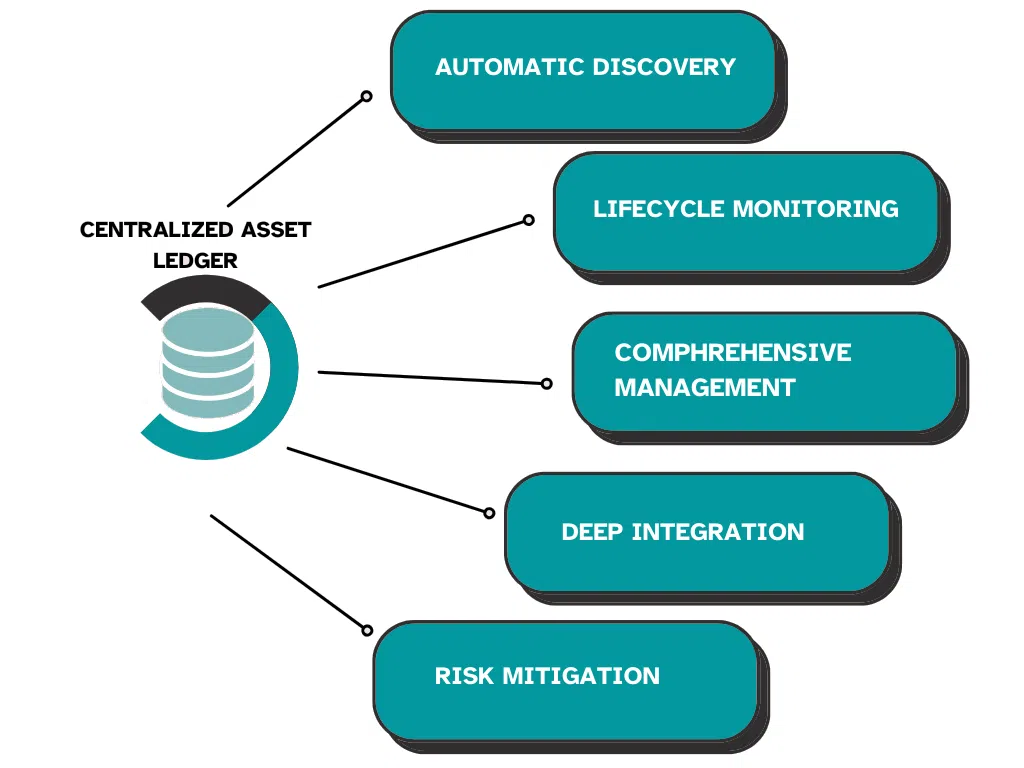
- Centralized Asset Ledger: All device details are stored in a structured, organized database, providing a single, real-time source of truth. From registering and defining devices to creating assets with data points and events, managing credentials, and enabling or disabling devices—everything is handled seamlessly through a unified system.
- Automatic Discovery: Instantly detects and onboards every IoT device, including those previously unregistered.
- Life Cycle Monitoring: Tracks asset usage and status throughout its lifespan for better predictability and planning.
- Comprehensive Management: Supports tangible and non-tangible assets, including monitorable and non-monitorable assets, ensuring no asset gets missed.
- Deep Integration: Connects asset data seamlessly with ITSM, CMDB, and CMMS systems for unified operational visibility.
- Risk Mitigation: Provides insights into risk probabilities along with recommended actions to strengthen reliability and security.
A single pane of glass enables both IT and OT users to view, manage, and act across the control plane (edge systems and connected devices/sensors) and the content plane (data and business insights).
Final Thoughts
Asset management has entered a new era—one where scale, speed, and security define success. As IoT ecosystems expand and edge environments grow more dynamic, organizations can no longer rely on fragmented tools or reactive processes. Intelligent, unified platforms like SmartHub INFER™ make it possible to gain complete visibility, strengthen security, and operate with confidence. The future belongs to enterprises that can manage their assets seamlessly, securely, and at scale—and that journey starts with the right foundation.
