
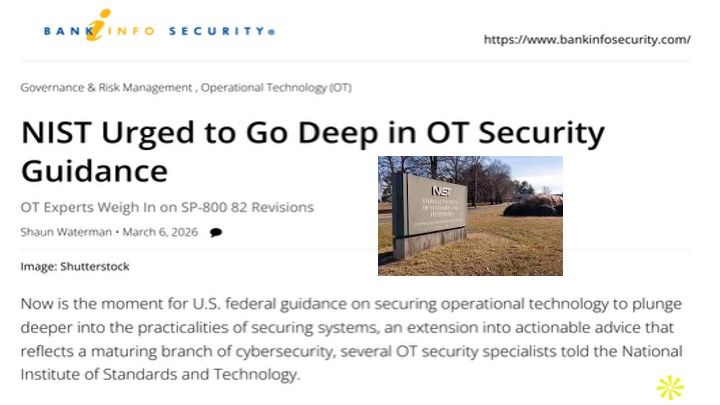
This recent BankInfo Security article says OT (Operational Tech) experts are urging NIST to go deeper in its operational technology security guidance – moving beyond high-level frameworks into practical, granular guidance for real-world OT environments.
𝑻𝒉𝒂𝒕 𝒊𝒔 𝒕𝒉𝒆 𝒓𝒊𝒈𝒉𝒕 𝒄𝒐𝒏𝒗𝒆𝒓𝒔𝒂𝒕𝒊𝒐𝒏. 𝑰𝒕’𝒔 𝒂𝒃𝒐𝒖𝒕 𝑰𝒐𝑻 𝑺𝒆𝒄𝒖𝒓𝒊𝒕𝒚 𝑶𝒑𝒆𝒓𝒂𝒕𝒊𝒐𝒏𝒔 (𝑰𝒐𝑻-𝑺𝒆𝒄𝑶𝒑𝒔)
Because the next cyber incident may not start in the data center.
It may start with a camera, access panel, sensor, controller, building system, EV charger, or edge device that is connected, unmanaged, unpatched, and invisible.
As IT, OT, IoT, and physical security continue to converge, enterprises need a new operating model.
❗ Not periodic audits.
❗ Not static spreadsheets.
❗ Not “scan or don’t scan” debates.
They need continuous visibility, asset intelligence, device trust, vulnerability context, firmware awareness, and safe OT-aware monitoring.
This is why 𝑰𝒐𝑻 𝑺𝒆𝒄𝑶𝒑𝒔 is becoming essential.
And some of the leading-edge startups are layering on Agentic AI kind of automation to deliver IoT-SecOps at fractional costs – delivering high ROI for CISOs/CIOs etc.,
Their focus is simple: 𝐴 𝑐𝑜𝑛𝑡𝑖𝑛𝑢𝑜𝑢𝑠 𝑠𝑒𝑐𝑢𝑟𝑖𝑡𝑦 𝑜𝑝𝑒𝑟𝑎𝑡𝑖𝑜𝑛𝑠 𝑙𝑎𝑦𝑒𝑟 𝑓𝑜𝑟 𝑡ℎ𝑒 𝑐𝑦𝑏𝑒𝑟-𝑝ℎ𝑦𝑠𝑖𝑐𝑎𝑙 𝑒𝑛𝑡𝑒𝑟𝑝𝑟𝑖𝑠𝑒 – 𝑜𝑢𝑟 𝑡𝑜𝑑𝑎𝑦’𝑠 𝑒𝑚𝑒𝑟𝑔𝑖𝑛𝑔 𝑤𝑜𝑟𝑙𝑑!
The call to action is simple: If you cannot see your OT and IoT assets, you cannot secure them.
Now is the time to bring OT, IoT, and edge devices into the security operations conversation – IoT SecOps – the new emerging paradigm for folks who run Global SOCs, Compliance & Audit, IT SecOps and their stakeholders – CISOs, CIOs & CEOs.